
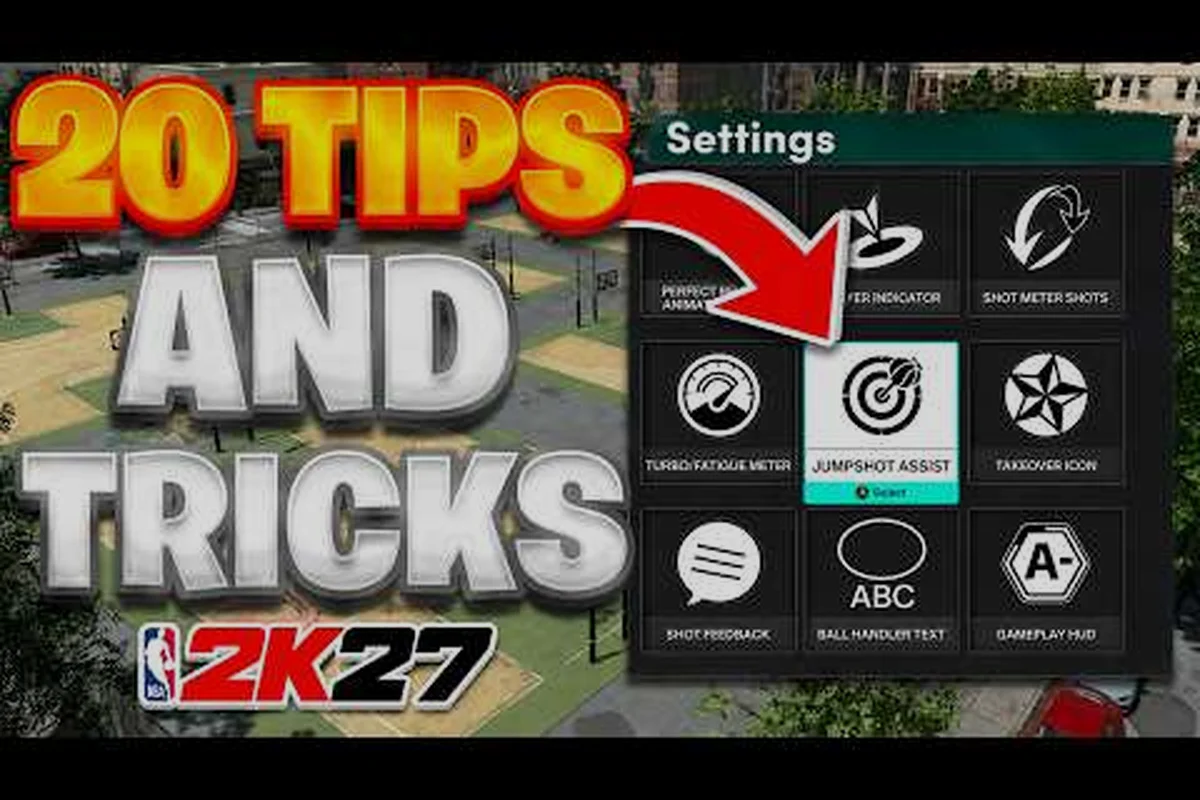
The jump from playing casual basketball games to competing seriously in NBA 2K27 can feel like stepping onto an unfamiliar court. The skill ceiling is remarkably high, and without proper direction, newer players often develop habits that hold them back for months. This NBA 2K27 beginner guide cuts through the confusion and delivers actionable advice that builds solid fundamentals immediately. Whether you purchased the game yesterday or you're still deciding whether to jump in, the strategies covered here will accelerate your improvement dramatically. Success in NBA 2K27 comes down to understanding three pillars: mastering your controls, making smart build decisions, and developing game sense through deliberate practice.
NBA 2K27.
Core Controls and Button Layout You Need to Master
Before attempting any meaningful gameplay, memorizing the button layout eliminates the hesitation that costs possessions and creates turnovers. The right stick governs shooting, dribbling moves, and defensive reach-ins, while the left stick controls movement and sprinting. The X or A button handles jumping and blocking attempts, and the B or Circle executes passes and drop steps in the post. Understanding when to use the Pro Stick versus button combinations separates competent players from those who consistently make optimal decisions under pressure.
| Action | Default Button (Xbox/PS) | Alternative Input |
|---|---|---|
| Move Player | Left Stick | N/A |
| Sprint | Hold Right Stick | N/A |
| Shoot/Jump | Right Stick (Release) | X/A Button Tap |
| Pass | X/A Button | N/A |
| Hop Gather | Double Tap X/A | Double Tap B/Circle |
| Block/Contest | X/A (While Near Shot) | Hold Right Stick Away |
| Steal | B/Circle | Tap X/A |
| Crouch/Stay Low | Hold Right Stick | N/A |
| Call Timeout | View/Back Button | Pause Menu |
The shot meter appears when releasing jumpshots, and timing varies significantly based on your player's attributes and animation selection. Early in your NBA 2K27 journey, stick with simpler releases that offer forgiving windows rather than high-difficulty animations that punish mistimed inputs. Dribbling combinations unlock as you gain familiarity with the rhythm of moves, but attempting complex handles before fundamentals clicks creates frustration and bad habits that are difficult to unlearn.
Creating Your MyCareer Build Without Regrets
Your first player build shapes every moment of your NBA 2K27 experience, and the consequences of poor attribute distribution linger for dozens of hours. Height matters enormously in this simulation, with taller players enjoying natural advantages in rebounding, interior defense, and contested shot blocking. However, speed penalties accompany excessive height, creating tradeoffs that demand thoughtful consideration based on your preferred playstyle. Guards excel at perimeter playmaking but struggle defending the paint, while centers dominate the glass but often become liabilities in fast-break scenarios.
| Build Type | Recommended Height | Key Attributes | Best For |
|---|---|---|---|
| Slashers | 6'4" - 6'8" | Driving layup, vertical, strength | Attacking the basket |
| Shooters | 6'3" - 6'7" | Three-point, mid-range, shot IQ | Floor spacing |
| Playmakers | 6'3" - 6'6" | Ball handle, pass accuracy, speed | Creating for others |
| Big Men | 6'10" - 7'1" | Rebound, block, post moves | Interior dominance |
| Two-Way | 6'5" - 6'9" | Balanced offensive/defensive stats | Versatile team play |
Position selection matters less than attribute distribution in modern NBA 2K27, and many successful builds intentionally misalign their assigned position to access particular badge pools and animations. Before committing Virtual Currency to your creation, experiment extensively with the build demo feature to feel the acceleration, shooting release, and defensive lateral quickness. Players who rush this process often spend significant VC retraining their player later, which compounds the frustration of early losses.
Offensive Fundamentals Every New Player Must Learn
Scoring efficiently requires understanding shot selection principles that separate high-percentage possessions from wasted clock. Close-range attempts within a few feet of the basket generate the highest conversion rates, followed by mid-range jumpers and finally three-pointers which carry inherent variance. Forcing difficult shots because of shot clock pressure or defensive denial leads to efficiency ratings that tank your team's performance and increase your opponent's confidence.
The pick-and-roll represents the foundation of modern basketball offense, and executing it properly unlocks spacing advantages that create open looks for everyone on the court. Setting the screen requires positioning your player between the defender and the ball handler, then rolling or popping based on the defensive coverage you observe. When defenders ICE the pick-and-roll by going under the screen, pull-up mid-range shots become available. When defenders switch assignments, attacking the mismatch before the help defense rotates creates easier opportunities.
Mid-range shooting deserves more attention from beginners than it typically receives, because the skill translates directly to competitive play where contested threes rarely fall. Developing a reliable pull-up jumper from fifteen to eighteen feet forces defenses to close out harder, which opens driving lanes that close-range finishers exploit. Learning to read defensive coverages and responding with appropriate counters transforms predictable isolation attempts into intelligent team basketball that opponents struggle to contain. For deeper exploration of shooting mechanics, check out our detailed guide on shooting threes that covers timing windows and shot selection.
Defensive Basics That Actually Win Games
Defense wins championships in NBA 2K27 just as it does in real basketball, and the gap between average defenders and lockdown specialists determines competitive matchups. The fundamental principle involves denying the ball handler space to operate while maintaining positioning that prevents easy drives to the basket. Excessive reaching leads to foul trouble and burnout, while passive play allows opponents to dictate the terms of engagement and find comfortable scoring positions.
Off-ball defense often gets neglected by newer players who focus exclusively on their assigned matchup, but this represents a critical error that competent opponents exploit repeatedly. Watching your player chase the ball while your teammate gets burned creates cascading defensive rotations that collapse the entire scheme. Instead, position yourself between likely passing lanes and call for switches when screens threaten to separate you from your assignment. Help defense rotations require anticipation rather than reaction, predicting where drives will penetrate and meeting them at the basket before the ball handler arrives.
Rebounding starts with positioning your body between the basket and the offensive player, using the glass or backboard to alter shot trajectories when you cannot secure the rebound outright. Boxing out manually rather than relying on auto-contest produces significantly better results, especially on offensive rebounds where timing separates possession from second-chance points. Consistent defensive rebounding ends opponent scoring runs and provides transition opportunities that break momentum and energize your team. Our guide on playing better defense covers these concepts in greater detail for players seeking defensive excellence.
Smart VC Spending and Progression Strategies
Virtual Currency represents your most valuable resource in NBA 2K27, and wasteful spending early creates bottlenecks that slow your entire progression. The impulse to purchase cosmetic items or flashy animations before establishing solid attribute foundations produces players who look impressive during creation but underperform during actual gameplay. Prioritizing attributes and badge upgrades over aesthetics accelerates your development curve and makes every VC dollar contribute meaningfully to wins.
The MyCareer grind requires patience, but specific strategies accelerate VC accumulation beyond the default progression pace. Completing daily objectives, reaching performance benchmarks during games, and maximizing endorsement deals during off-days compounds into substantial earnings over time. Playing on higher difficulty settings during practice sessions or offline modes increases VC rewards proportionally, though the time investment required to complete those games must factor into your decision.
| VC Priority | Why It Matters | Recommended Timing |
|---|---|---|
| Core Attributes | Direct impact on performance | Immediate investment |
| Key Badges | Unlock abilities and boost effectiveness | After basic attributes |
| Animations | Release packages and dunks | When foundation established |
| Cosmetics | Visual customization | Only after competitive needs met |
Managing your VC budget also means resisting the temptation to rebuild your player prematurely, which wastes both currency and the time invested in developing the original build. Most attribute upgrades cost diminishing amounts relative to their benefit, making early investments particularly valuable compared to later additions. By the time you reach elite attribute levels, the VC required per point increase makes complete rebuilds economically punishing compared to continued incremental improvement.
Quick Wins and Time-Saving Strategies
NBA 2K27 contains numerous quality-of-life features that newer players often overlook, resulting in wasted time and missed opportunities. Fast travel between locations in The City eliminates significant walking that would otherwise consume hours of gameplay, and unlocking additional fast travel points early compounds this benefit throughout your career. Skipping cutscenes after your first viewing preserves both time and patience, especially during the repetitive early-story missions that most players complete multiple times across different builds.
Shot stick functionality deserves exploration beyond basic shooting, because the right stick controls passing directions and sprint toggles that affect your offensive approach. Double-tapping directional inputs produces hop gathers and escape dribbles that create space against aggressive defenders, and these moves often succeed where stationary dribbling fails. Practice these inputs during informal play sessions until they become automatic responses rather than deliberate choices that slow your decision-making.
New Player Pitfalls: VC Waste, Build Regret, and Bad Habits
The learning curve in NBA 2K27 punishes several predictable errors that newer players encounter without guidance, and awareness of these pitfalls prevents wasted hours developing counterproductive habits. Chasing stats rather than winning games produces highlight-reel plays that ultimately contribute to losses, and coaches notice the difference between productive contributions and empty calories. Pass-first point guards who make correct decisions consistently outperform selfish scorers who pile up empty points while their team collapses.
Forcing hero plays instead of making simple passes represents perhaps the most common competitive mistake, because the temptation to make spectacular plays overwhelms rational assessment of available options. The easy assist often leads to easier shots than attempting difficult individual attempts against set defenses, and the confidence generated by队友's success ripples through your entire team's performance. Ball movement that probes defensive rotations eventually produces openings that static isolation play never creates, and patient offense eventually breaks down any defensive scheme.
Neglecting practice mode costs players significant improvement that dedicated skill development would provide, because live games introduce variables that distract from specific mechanical refinement. Free throw shooting, for example, responds well to deliberate repetition in controlled environments where you can focus entirely on timing without defensive pressure. The twenty minutes spent practicing free throws before a gaming session often produces more improvement than an entire evening of casual games where shooting mechanics regress under stress.
Frequently Asked Questions
What is the best build for beginners in NBA 2K27?
A two-way forward with balanced attributes around 6'7" provides enough size to defend multiple positions while maintaining the athleticism needed for slash-and-kick offense. This build type forgives positioning mistakes on defense and offers multiple viable offensive options that adapt to whatever the defense gives you.
How do I get VC faster in NBA 2K27 as a new player?
Prioritize completing all daily agendas and challenges, which grant substantial VC rewards for objectives you would accomplish anyway during normal play. Playing through MyCareer on Pro difficulty rather than All-Star produces faster completion times that offset the lower per-game rewards, resulting in better VC-per-hour efficiency overall.
Should I use button shooting or stick shooting as a beginner?
Button shooting offers more forgiving timing windows that help new players make shots consistently while developing their sense of the shot meter. Stick shooting provides greater precision once mastered but punishes mistimed inputs more severely, making it a poor choice during the initial learning phase when muscle memory is still forming.
How important are badges for new players?
Badge investments become valuable after establishing baseline attributes, because the abilities they unlock depend on having sufficient stats to trigger them. Spending VC on badges before reaching competitive attribute levels produces minimal gameplay benefits, so focus on core stats first and treat badge upgrades as secondary progression goals.
What game modes should beginners focus on?
MyCareer provides the most structured learning environment with progressive difficulty and story elements that maintain engagement during the early grind. Once comfortable with core mechanics, The City and Park modes introduce competitive play against human opponents that accelerates learning through direct feedback.