
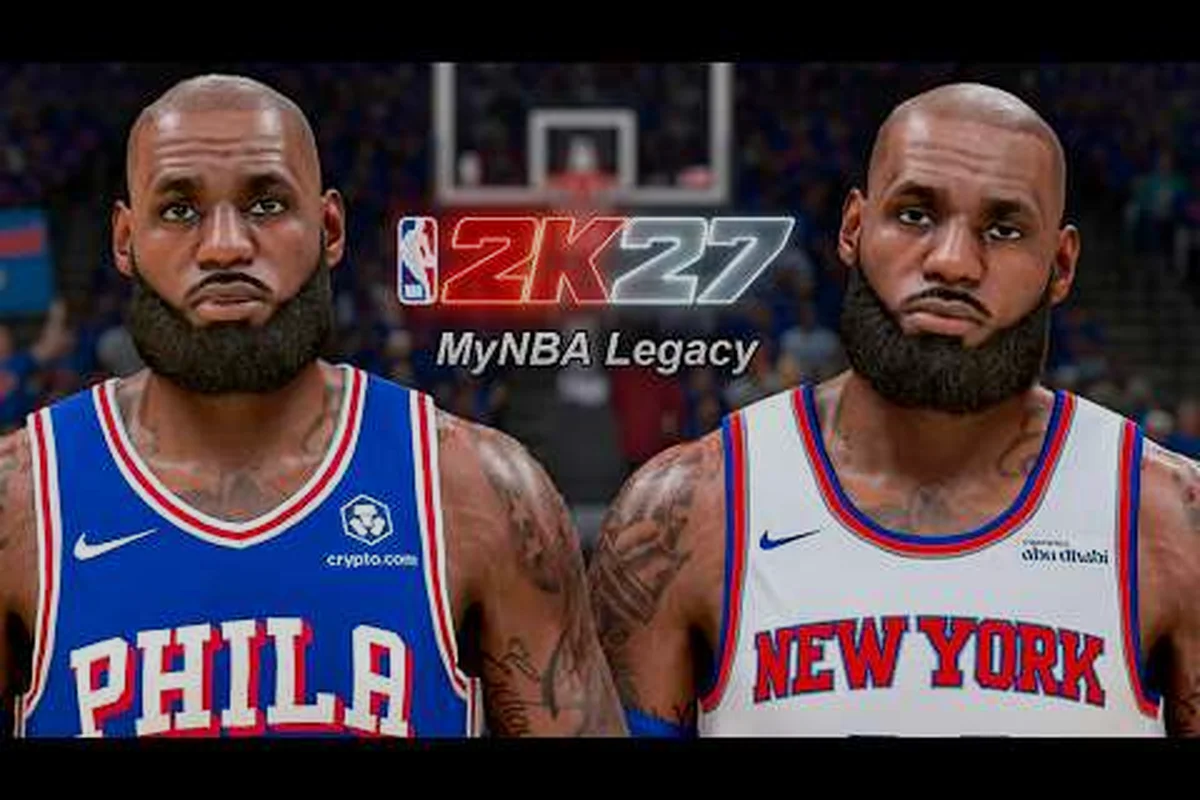
NBA 2K27 MyNBA Era modes transport you back to basketball's most iconic decades, letting you rewrite history with the Chicago Bulls' dynasty, orchestrate the Los Angeles Lakers' three-peat, or build a superteam around LeBron James in Miami. These modes go far beyond simple roster imports—they simulate the actual rules, styles, and competitive landscapes that defined each era. Understanding how each era functions, which historic teams are available, and how rule changes affect gameplay creates entirely different strategic challenges. Whether you want to extend Michael Jordan's championship window or prevent the Boston Celtics from acquiring Kevin Garnett, MyNBA Era modes give you that control.
The mode's depth stems from its commitment to authenticity. Each era isn't just a reskin of modern basketball—it adjusts pace, three-point importance, defensive schemes, and even salary cap structures to match the period. This realism appeals to basketball purists who appreciate how the game evolved, while the fantasy elements attract players who want to explore "what if" scenarios that never happened in real life. The combination makes NBA 2K27 MyNBA Era modes one of the most replayable features in the entire game. Appreciate how the game evolved, while the fantasy elements attract players who want to explore "what if" scenarios that never happened in real life. The combination makes NBA 2K27 MyNBA Era modes one of the most replayable features in the entire game, and our detailed MyNBA guide breaks down exactly how to maximize each era's unique mechanics. The combination makes NBA 2K27 MyNBA Era modes one of the most replayable features in the entire game, and our detailed MyNBA guide, the MyNBA Era strategy guide, breaks down exactly how to maximize each era's unique mechanics.
What Are MyNBA Era Modes in NBA 2K27
MyNBA Era modes allow you to start a new franchise at any point in NBA history, selecting from predefined periods that correspond to basketball's most influential dynasties and transitions. Rather than beginning in the current season, you choose when your legacy begins—whether that's the early 1990s when the Bulls dominated, the early 2000s when Kobe Bryant emerged as an elite scorer, or the 2010s when LeBron James reshaped superteam culture. Each selection loads the appropriate rosters, coaching staffs, and team chemistries that existed at that time.
The mode works within the broader MyNBA framework, meaning you still manage contracts, develop players through the G League, negotiate trades, and guide your franchise toward championships. The difference lies in the historical context—some eras feature shorter three-point lines, others enforce different hand-checking rules, and several periods have distinct playoff formats or award systems. Your front office decisions must account for these variations. A max contract that seems reasonable in 2024 might cripple your cap flexibility under 1990s salary structures, while a stretch big who thrives in the modern game might sit unused in an era that valued traditional post play.
Setting up an Era mode takes just a few steps from the main MyNBA menu. You select "Start New League," choose "Era" rather than "Standard," and then pick your preferred timeline. The game displays each era's available teams, key players, and rule set before you confirm your selection. This preview helps you decide which period matches your preferred playstyle and strategic interests. Once confirmed, the simulation begins with full historical accuracy for that season's rosters and circumstances.
The Michael Jordan Era (1991-1998)
The Michael Jordan Era in NBA 2K27 MyNBA captures the Bulls' first three-peat and their second championship run, representing basketball's shift from a post-dominated sport to one where perimeter excellence began reshaping team construction. Starting in the 1991-92 season, you inherit a Chicago Bulls roster featuring Jordan at his scoring peak, Scottie Pippen emerging as an elite two-way player, and Phil Jackson's triangle offense installing the principles that would define championship basketball for the next decade. Every game reflects the physicality of that era—defenders could hand-check, zone defenses were limited, and the three-point line sat at its original distance, slightly shorter than modern specifications.
| Player | Position | Scoring (0-99) | Defense (0-99) | 3PT Rating (0-99) | Championship Rings (1991-98) |
|---|---|---|---|---|---|
| Michael Jordan | SG | 97 | 85 | 72 | 6 |
| Scottie Pippen | SF | 91 | 93 | 65 | 6 |
| Dennis Rodman | PF | 68 | 98 | 42 | 4 |
| Horace Grant | PF | 82 | 80 | 58 | 3 |
Historic teams available during this period extend beyond Chicago. The Detroit Pistons, Portland Trail Blazers, Phoenix Suns, and Utah Jazz all appear with accurate rosters representing the era's competitive landscape. The Pistons roster includes Isiah Thomas and Joe Dumars during their "Bad Boys" championship window, while the Suns feature Charles Barkley chasing his only MVP award. Each team's ratings reflect their real-life capabilities—Steve Kerr's three-point percentage, Michael Jordan's scoring average, and Scottie Pippen's defensive versatility all translate accurately to the simulation. The attention to detail makes playing through this era feel like stepping into a time machine, with every possession carrying the weight of that period's basketball philosophy.
Rule changes dramatically affect how you approach games in the Jordan Era. Hand-checking permits aggressive perimeter defense, meaning CPU opponents contest every dribble move with physical contact that modern players might find jarring. The three-point line sits at 22 feet in the corners and 23 feet 9 inches at the top of the key—fractionally shorter than today's uniform distance. This subtle change makes corner three-pointers slightly more valuable, rewarding teams that move the ball into optimal spacing positions. Pace is noticeably slower, with teams averaging fewer possessions per game, making each defensive stop and offensive set more consequential. If you want to build a dynasty that rivals Jordan's Bulls, you must master these era-specific dynamics rather than applying modern basketball principles.
The Kobe Bryant Era (2000-2010)
The Kobe Bryant Era spans the Lakers' three consecutive championships and Kobe's later championship runs with Pau Gasol, representing a transition period where basketball began blending post play with perimeter shooting. Starting in the 2000-01 season, you experience the Shaq-Kobe partnership at its peak before managing the roster through their contentious split and eventual rebuild. The mode captures how Phil Jackson's triangle evolved, how Kobe developed into a complete offensive weapon, and how Western Conference competition intensified with Tim Duncan's Spurs, Dirk Nowitzki's Mavericks, and Steve Nash's Suns all fielding elite rosters. Playing through this decade means adapting to a game still heavily influenced by post-up sets while gradually incorporating more pick-and-roll actions.
| Player | Position | Mid-Range (0-99) | Post Scoring (0-99) | Clutch (0-99) | Peak Seasons |
|---|---|---|---|---|---|
| Kobe Bryant | SG | 95 | 88 | 92 | 2000-2010 |
| Shaquille O'Neal | C | 52 | 97 | 85 | 2000-2004 |
| Pau Gasol | PF | 84 | 82 | 78 | 2008-2010 |
| Lamar Odom | SF/PF | 79 | 75 | 74 | 2008-2010 |
The Lakers roster during their championship years features Shaquille O'Neal posting career-high efficiency numbers alongside Kobe's developing mid-range mastery. Opposing teams possess similar balance—you might face Tim Duncan dominating the paint for San Antonio while Manu Ginobili and Tony Parker stretched defenses with their drive-and-kick games. Steve Nash's Phoenix Suns revolutionized spacing with their seven-seconds-or-less offense, and that innovation translates into gameplay challenges. Defending against those Suns requires disciplined rotation timing and strong defensive rebounding, because missed shots against fast-break-oriented teams create immediate transition opportunities. The era's tactical diversity means your coaching adjustments matter more than in periods dominated by single styles.
Gameplay mechanics during the Kobe Era reflect league-wide rule evolutions. Hand-checking restrictions began in 2004-05, gradually freeing perimeter players from the physical contact that defined the Jordan Era. Zone defenses became more viable as coaches exploited规则 loopholes, leading to the "illegal defense" rule's eventual removal. These changes mean starting your Kobe Era franchise in different seasons produces meaningfully different basketball experiences. An early 2000s simulation emphasizes post play and physical defense, while a 2008 simulation features more floor spacing and pick-and-roll heavy offenses. You can choose which moment in this decade interests you most, customizing your historical experience before the simulation begins.
The LeBron James Era (2011-2020)
The LeBron James Era captures the "Decision" aftermath, the Heat dynasty, Cleveland's championship redemption, and the Lakers' 2020 title run, reflecting basketball's modern superteam era where player movement reshaped competitive balance. Starting your franchise in 2011 places you in Miami alongside Dwyane Wade and Chris Bosh, recreating the original Big Three that polarized basketball fans worldwide. The gameplay captures how these star-studded rosters functioned—multiple shot creators demanding touches, defensive schemes built around protecting paint while contesting three-pointers, and the constant pressure of championship-or-bust expectations. Alternatively, beginning in 2014 lets you rebuild Cleveland around LeBron's return, or 2018 when he joined a young Lakers core hoping to accelerate their development.
Historic teams during this period represent the league's geographic and stylistic diversity. Golden State Warriors rosters feature their "Death Lineup" iterations, with Stephen Curry and Klay Thompson revolutionizing three-point volume while Draymond Green orchestrated defenses from the center position. The San Antonio Spurs appear with their timeless fundamentals and Kawhi Leonard's two-way excellence. The Houston Rockets under Mike D'Antoni embraced analytics-driven shot selection, launching an unprecedented three-point volume that challenged conventional basketball wisdom. Each roster performs according to their real-life strengths—Curry's off-ball movement creates spacing challenges, Kawhi's mid-range mastery rewards methodical half-court offense, and the Bucks' Giannis Antetokounmpo dominates as a transition terror who punishes poor defensive execution.
Modern era gameplay introduces pace-and-space principles that reward efficient shooting and transition play. The three-point line sits at its current distance, hand-checking is prohibited, and defensive three-second violations keep paint areas clear for driving lanes. These rules create the offensive explosion that defines contemporary basketball—teams average more points per game, three-point attempts have increased yearly, and defensive schemes must balance rim protection against perimeter containment. Playing through the LeBron Era means mastering these dynamics, whether you're building a superteam that competes for multiple championships or rebuilding a struggling franchise through draft asset accumulation and smart free agent acquisitions.
Fantasy Draft and Custom Era Creation
Beyond predefined eras, NBA 2K27 MyNBA Era modes offer Fantasy Draft functionality that lets you create entirely hypothetical scenarios using any players from NBA history. The Fantasy Draft pulls from a comprehensive database spanning every active NBA player across all eras, allowing matchups that never occurred in reality. Imagine pitting a 1996 Bulls roster against the 2017 Warriors, watching Michael Jordan face Stephen Curry in a hypothetical Finals clash that basketball fans have debated for decades. The mode preserves each player's attributes and tendencies from their peak seasons, meaning you're not getting watered-down versions of legends but authentic recreations of their prime capabilities.
Setting up a Fantasy Draft involves selecting your era parameters before the draft lottery begins. You choose which decades to include in the player pool, whether to restrict by position or allow "any" designations, and how many rounds the draft continues. A standard Fantasy Draft typically runs 10-15 rounds, giving each franchise multiple stars and role players before the simulation begins. The draft order randomizes annually, creating replayability if you want to experience different roster constructions. After drafting concludes, you manage your team exactly as you would in any MyNBA franchise, developing young players through G League assignments and veteran leadership through strategic rest management.
Custom Era creation goes beyond Fantasy Draft by letting you establish any starting point in league history, then modifying rules, rosters, or settings before simulation begins. You could recreate the 1995 season with allExpansion teams active, simulate the 2011 lockout with modified cap structures, or build an alternate timeline where Kevin Durant never joined the Warriors. This flexibility transforms NBA 2K27 MyNBA into a basketball sandbox limited only by your imagination. The NBA 2K27 franchise mode community features numerous custom era downloads shared by creators who obsess over historical accuracy and hypothetical scenarios, extending replayability far beyond official content.
Comparing Era Rules: Hand-Check, Defensive Three Seconds, and Zone Changes
Understanding how rules differ across eras helps you make informed franchise decisions and optimize your coaching strategies. The table below summarizes key variations that affect gameplay in NBA 2K27 MyNBA Era modes.
| Setting | Jordan Era (1991-98) | Kobe Era (2000-10) | LeBron Era (2011-20) | Modern Era |
|---|---|---|---|---|
| Three-Point Line | 22'/23'9" (original) | 22'/23'9" (original) | 23'9" (uniform) | 23'9" (uniform) |
| Hand-Checking | Permitted | Phased out 2004-05 | Prohibited | Prohibited |
| Zone Defense | Restricted | Gradually permitted | Allowed | Allowed |
| Pace (Possessions/Game) | 92-95 | 93-98 | 95-100 | 98-102 |
| Three-Point Volume | Low (12-18/game) | Moderate (18-22/game) | High (22-28/game) | Very High (28-35/game) |
| Defensive Three Seconds | Not enforced | Phase-in period | Enforced | Enforced |
The pace differential alone requires strategy adjustments. Jordan Era basketball rewards methodical half-court offense and physical defense, while LeBron Era games demand transition efficiency and three-point shot quality. A transition bucket in the 1990s might be an unexpected bonus, whereas in modern eras it represents fundamental offensive execution. Similarly, three-point defense matters significantly more in LeBron and Modern Eras where volume shooters stretch opposing defenses thin if left unguarded.
Winning Across Eras: Universal Franchise Strategies
Success in NBA 2K27 MyNBA Era modes requires adapting your franchise philosophy to each period's realities rather than applying one-size-fits-all approaches. Building through the draft works differently when elite prospects specialize in skills that the era values—if you're in the Kobe Era, a stretch big might sit on your bench while a traditional center thrives. Player development paths also vary by era, as younger players learn specific fundamentals that match their generation's basketball philosophy. Your coaching staff selections should reflect era-appropriate philosophies, ensuring your players develop skills that contribute to wins in their specific context.
Managing cap space demands particular attention during era transitions. Salary cap structures evolved significantly between 1991 and 2024, with different max contract limits, luxury tax thresholds, and rookie scale provisions affecting how you construct rosters. Jordan Era teams faced tighter financial constraints that rewarded smart drafting over free agent spending, while LeBron Era franchises could aggregate salary in trades more flexibly. Before committing to long-term deals, review your era's cap rules in the MyNBA settings menu to avoid hamstringing your franchise with contracts you cannot escape.
Playing games themselves requires era-specific tactical adjustments. The CPU's defensive tendencies vary by period—Jordan Era opponents hand-check relentlessly and funnel drives toward help defenders, while LeBron Era teams switch pick-and-rolls and rotate aggressively to protect the rim. Exploit these tendencies by identifying what your roster does well within that era's context. A mid-range specialist thrives in the Kobe Era where teams sag off non-three-point shooters, while a floor-spacing big dominates modern matchups where teams cannot camp in the paint. Match your offensive sets to your personnel and era simultaneously for optimal results.
Frequently Asked Questions
What historic teams are available in NBA 2K27 MyNBA Jordan Era mode?
The Jordan Era includes the 1991-98 Bulls with Michael Jordan, the Bad Boys Pistons, Charles Barkley's Suns, the Utah Jazz with Karl Malone and John Stockton, Hakeem Olajuwon's Rockets, and Patrick Ewing's Knicks. Each roster reflects that specific season's team composition and performance levels.
Can I create custom eras combining players from different decades?
Yes, the Fantasy Draft mode lets you select players from any era and build rosters without restrictions. You can also use custom era settings to establish any historical starting point and modify rules, rosters, or parameters before beginning your simulation. Community creators also share custom era files for download.
How do defensive rule changes affect gameplay across eras?
Hand-checking in earlier eras allows aggressive perimeter defense that slows pace and rewards physicality. Later eras prohibit hand-checking, making dribble penetration easier and increasing overall scoring. Zone defense rules similarly evolved, with modern eras allowing switching and rotational schemes that create the pace-and-space style dominant in contemporary basketball.
Do player attributes change when playing in different eras?
Player ratings remain consistent with their historical peak performances, but their effectiveness varies based on era rules. A three-point shooter rated 85 overall contributes more in modern eras where three-point volume is high, while the same player in a Jordan Era context might see limited minutes because the era valued post play over perimeter shooting.
What strategies work best when rebuilding a struggling franchise in MyNBA Era modes?
Focus on drafting players whose skills match your era's valued attributes. Accumulate draft picks through trades of expiring contracts. Develop young players through the G League to maximize their growth curves before they demand expensive second contracts. Patience matters—building through the draft works slowly but creates sustainable championship cores that hand-checking era teams can maintain for years.